REVIEW · BUENOS AIRES
La Boca Out off the Beaten Track
Book on GetYourGuide →Operated by Paola De Luca tuguiaenba · Bookable on GetYourGuide
La Boca can feel touristy fast, unless you have a local guide. Paola De Luca leads you through streets, murals, and buildings most people miss, with context that makes the neighborhood make sense. I love how the tour connects art to real social struggles, not just pretty walls. I also love the hands-on contrast of going inside a converted immigrant tenement and then stepping into community life at the volunteer fire station. The one catch: this is a focused walk, and the rules (no alcohol, no jewelry, no electric wheelchairs) mean it’s not built for everyone.
You’ll do it at an easy pace in a small group (up to 10), starting and ending in La Boca, then finishing at Caminito for the classic fileteado-and-tango scene. If your idea of travel is purely relaxing photo stops with no walking at all, you might want something else.
In This Review
- Key points you’ll care about before you go
- La Boca Out off the Beaten Track: why this one feels different
- The 150-minute route: where you start, where you finish
- Harbor views, warehouses, and the immigrant arrival scene
- Inside the conventillo: corrugated metal tenement life, now a cultural center
- The first volunteer firefighter station in Argentina
- Boca murals: social issues painted large
- Anarchist newspaper walls, bordellos, and the neighborhood’s survival logic
- Caminito at the end: tango corners and fileteado details
- Coffee in a café tied to the neighborhood (1882)
- Optional extra: Museum of Fine Arts of La Boca (not included)
- Practical value: what’s included, what’s not, and what to watch for
- Is this tour right for you?
- Should you book La Boca Out off the Beaten Track?
- FAQ
- What is the price and duration of the tour?
- Where do I meet the guide and where does the tour end?
- Is the group large?
- What languages are offered?
- What’s included in the price?
- Is food included?
- Can I visit the Quinquela Martín Museum on this tour?
- Are there any restrictions for the tour?
Key points you’ll care about before you go
- Small-group pacing (10 or fewer) keeps questions flowing and the tour from feeling rushed
- Paola De Luca’s local storytelling ties murals, buildings, and institutions to what La Boca became
- Inside access: you get into a conventillo and the Volunteer Fire Department station
- Art with context: Boca murals cover social themes, not just style
- Caminito at the end gives you a satisfying finish with tango and fileteado all around
- Coffee time at a notable spot built into the experience (not tacked on later)
La Boca Out off the Beaten Track: why this one feels different
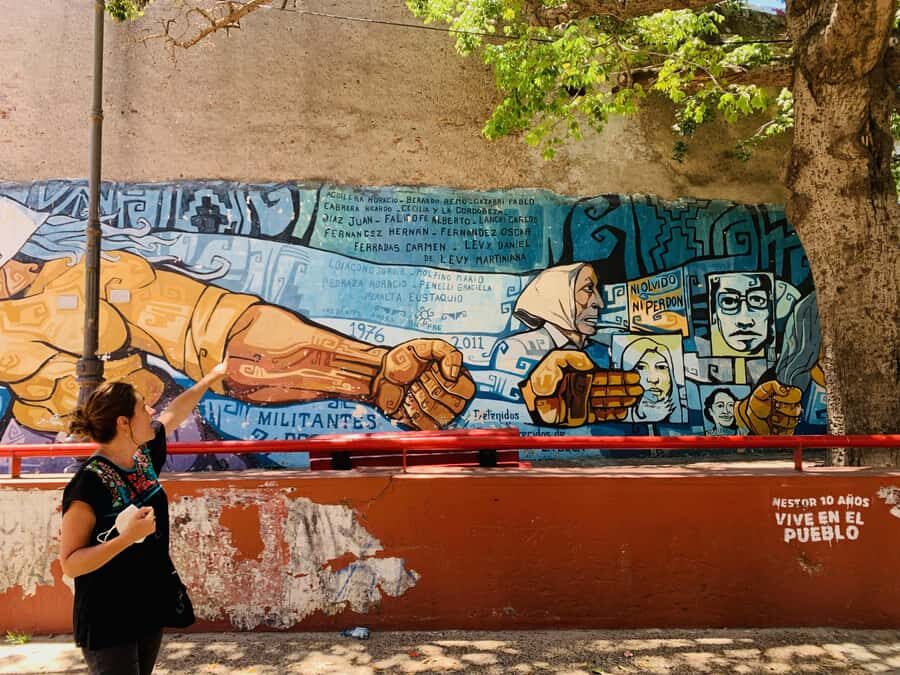
La Boca has a reputation. Bright paint. Tango posters. Crowds drifting toward the same corners. This tour works because it does the opposite of that script: it slows you down and points you at the neighborhood’s meaning.
The big reason to choose it is the balance. You get the postcard side of La Boca at the end, but the main course is what sits just outside the usual photo route: corrugated-metal immigrant housing now turned into a cultural center, a community institution that’s been around since the early days, and murals that talk about politics, labor, and identity. You’re not only looking. You’re learning how to read the neighborhood.
At $35 for about 150 minutes, it’s not a bargain-food free-for-all. But it’s also not priced like a luxury show. The value comes from actual entrances included and a guide who can explain what you’re seeing while you’re there, not after the fact.
And yes, you’ll end with Caminito, because it’s part of the story. Just know you’ll reach it with better eyes than when you arrive.
Other La Boca tours we've reviewed in Buenos Aires


The 150-minute route: where you start, where you finish
You meet at the corner of Martín Rodríguez & Avenida Don Pedro de Mendoza in La Boca. From there, the tour stays concentrated in La Boca and finishes at Caminito. The full tour time is about 150 minutes, with guided segments plus a dedicated coffee stop.
That matters because the pacing stays practical. You’re not spending the evening in transit. You’re spending it walking through layers of the neighborhood: harbor life, immigrant arrivals, early community services, artists’ Boca identity, and finally the street-art stage of Caminito.
Group size is kept tight—limited to 10 participants—so you can ask questions and hear answers without shouting. Tour language is English and Spanish, and Paola De Luca is the listed guide.
Harbor views, warehouses, and the immigrant arrival scene
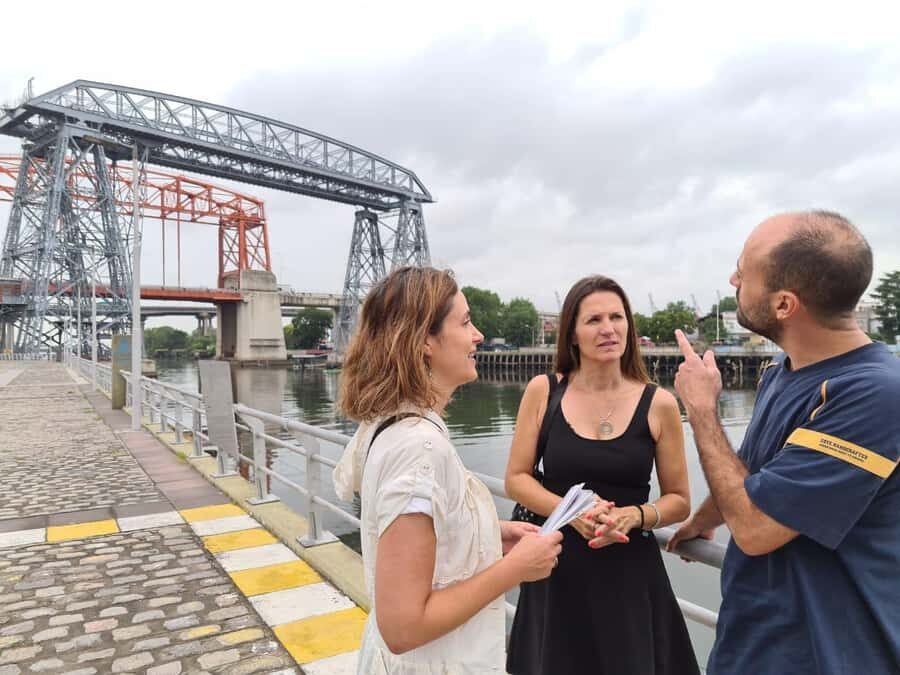
The tour begins with the part of La Boca that explains everything else: the working waterfront. You’ll see the harbor and warehouses, and you’ll stop at the picturesque train station where large numbers of immigrants arrived.
This isn’t just scenery. It’s the foundation for why La Boca looked (and felt) the way it did. You’ll get a guided sense of what the area was for—movement of people, jobs tied to the port, and new communities taking root quickly. When you later step into immigrant housing, those stops stop being random and start feeling logical.
If you’re the type who likes cities only when they have a reason to exist, this is the start you want. It gives you the mental map to understand the murals and the institutions that follow.
Inside the conventillo: corrugated metal tenement life, now a cultural center
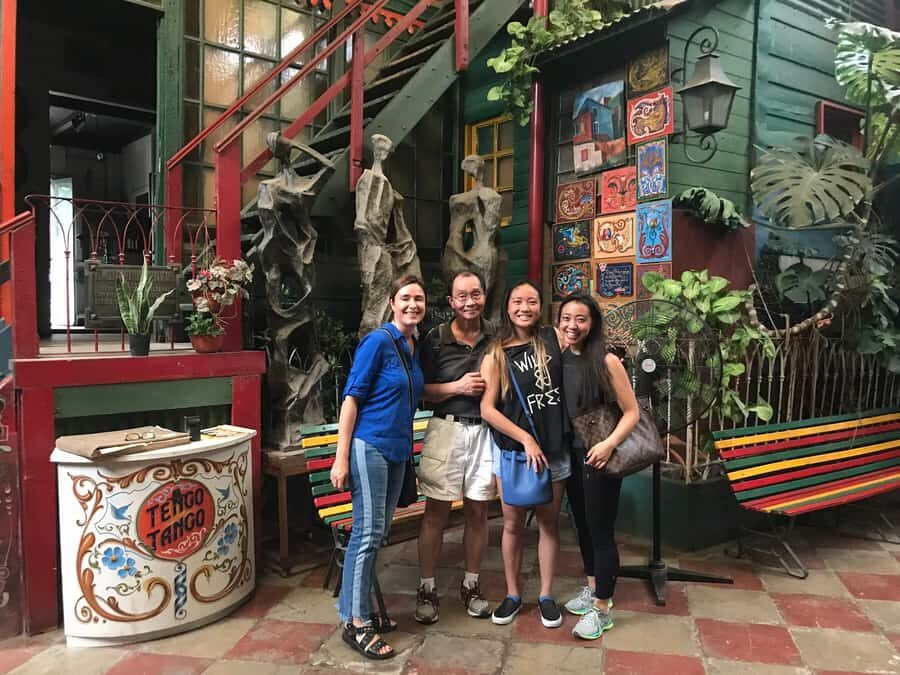
One of the most important stops is going inside a conventillo, a type of immigrant tenement. The buildings you’ll see were clad in corrugated metal, and the spaces once provided shelter for people arriving with little and hoping for work.
Today, that same kind of structure hosts a cultural center. So the tour isn’t only about the past—it shows how buildings get reused as communities change.
Why this stop is worth your time: it turns “history” into something physical. You can stand inside the space and understand how tight, practical housing shaped daily life. And once you’ve seen it, the neighborhood’s art and community institutions don’t feel decorative. They feel like survival tools plus identity.
The only downside is that this is an interior stop and the tour includes walking between locations. If you need a lot of sitting breaks, plan accordingly.
The first volunteer firefighter station in Argentina
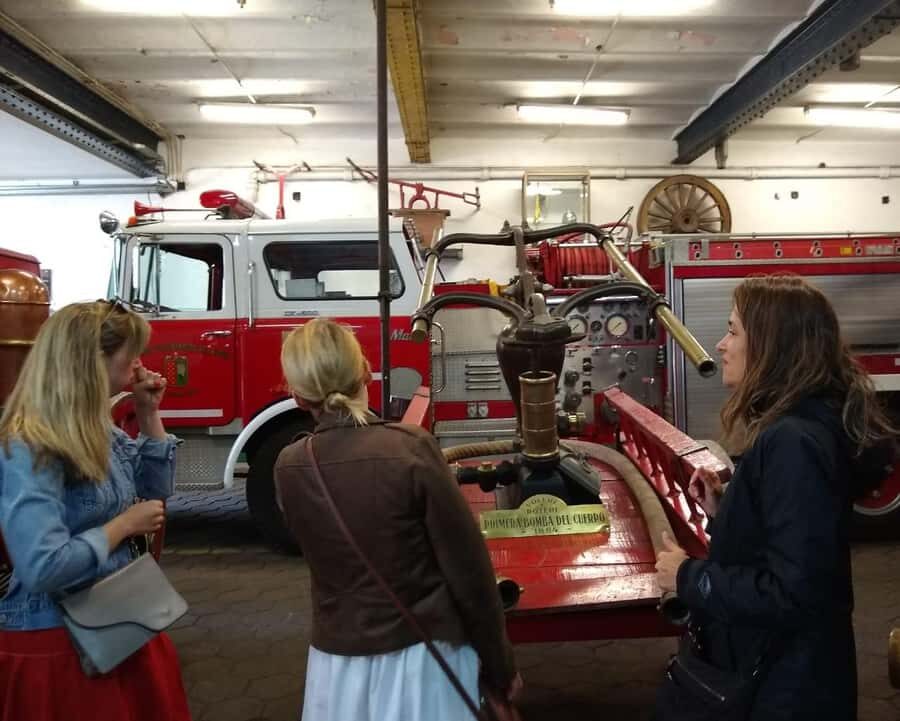
Then you get to community life in a very literal way: the Volunteer Fire Department, described as the first in all Argentina. You’ll enter the station as part of the experience.
This is where the tour quietly shifts from “nice neighborhood tour” to “how people built safety and support.” Fire stations aren’t just buildings; they’re a window into organization, mutual aid, and what neighbors did when official help wasn’t guaranteed.
And it fits the theme of La Boca: not only art and sport, but also networks. The guide’s explanations help connect the dots between the community’s needs and the institutions that formed to meet them.




Boca murals: social issues painted large
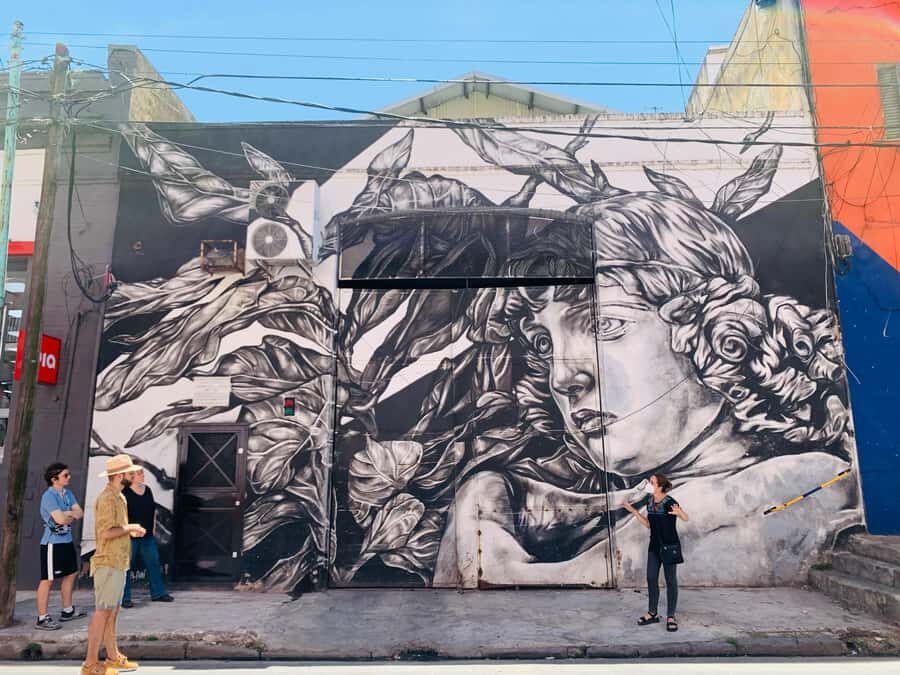
La Boca is famous for murals, but this tour doesn’t treat them like Instagram backdrops. You’ll be guided through streets with murals that reflect different social issues, so the art reads like commentary.
This is one of the most praised parts of the experience. Paola De Luca brings context and detail that doesn’t usually show up on quick walks. The result is you stop seeing murals as style and start seeing them as statements—about class, work, identity, and the pressures faced by communities over time.
Tip: give yourself time to look up. The best work is often higher than you expect, and the guide’s pacing helps you notice details you might otherwise miss.
Anarchist newspaper walls, bordellos, and the neighborhood’s survival logic
You’ll also see older buildings that once hosted anarchist newspapers and bordellos in the early 20th century. That’s a reminder that La Boca has held many currents of life, including political movements and the informal economy around port life.
Paired with that are two local icons that matter for understanding the neighborhood: football (with the Boca Juniors Stadium visible from the outside) and Religion (the Salesian Church), which served as refuges for rootless communities.
This is a clever sequence for your brain. It shows how different institutions—sport, faith, media, and later formal culture—helped people form belonging when they had little stability.
If you’re worried about the tour being too gloomy, don’t. The points are real, but the tone stays human: people building meaning from whatever they had.
Caminito at the end: tango corners and fileteado details
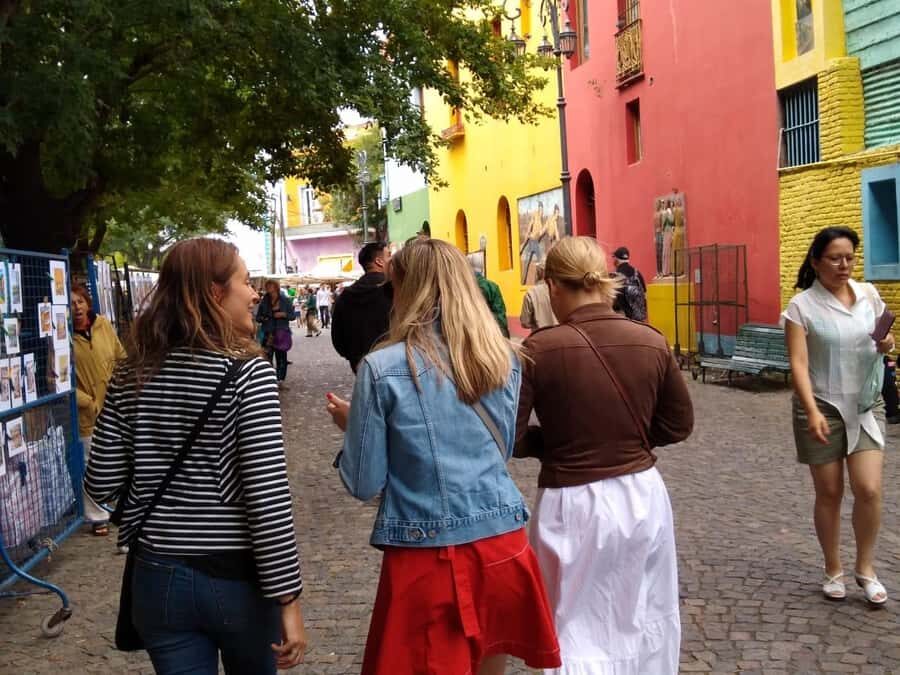
After the more offbeat stops, you finish in Caminito. This is the classic La Boca lane where you’ll find tango and fileteado in lots of corners.
Caminito can be crowded, depending on the day. The advantage is that you arrive with context now. The colors, the painted shapes, and the performance energy feel earned rather than randomly staged.
Think of this as the finale: the neighborhood’s showy side, but you’ll understand what it grew out of.
Coffee in a café tied to the neighborhood (1882)
The tour includes a coffee stop at an old, notable café founded in 1882. This is a smart move. Walking tours feel better when you get a real pause, and coffee turns the experience into something you remember, not just something you pass through.
You’ll likely appreciate this more if you’re the type who likes talking about what you’re seeing. Paola’s style (warm, story-based, with room for questions) is part of why the coffee moment lands.
One practical note: this isn’t described as a meal stop, and food is not included. If you’re hungry, plan to grab something before or after the tour.
Optional extra: Museum of Fine Arts of La Boca (not included)
If you want more, the tour mentions the Museum of Fine Arts of La Boca, which is partly in the building that was home to Benito Quinquela Martín. The ticket entrance is not included, so you’d need to pay separately if you add it.
That’s fine. You’re not forced into museum time during the two-hour walk, and you can decide based on your interests. If art and artists are your main obsession, you’ll probably want to add it. If you’d rather spend your time outside, you already got a strong dose of the neighborhood’s visual language.
Practical value: what’s included, what’s not, and what to watch for
Included:
- Entrance to the firefighter station
- Entrance to the conventillo
- Coffee
Not included:
- Food
- Museum entrance for the Quinquela Martín site
Also in the mix:
- Live guide in Spanish and English
- Duration about 150 minutes
- Start at Martín Rodríguez & Avenida Don Pedro de Mendoza; end at Caminito
- Small group, up to 10
Rules to keep in mind:
- No jewelry
- No alcohol and drugs
- No electric wheelchairs
And there’s a clear note on suitability: it’s not suitable for people over 95 years. If you’re near that limit or have mobility concerns, it’s worth thinking carefully about the walking component.
Is this tour right for you?
I’d point you toward this tour if you want La Boca with a brain and a heartbeat: murals with meaning, buildings with purpose, and a guide who explains how the neighborhood formed and why it looks the way it does today.
It’s also a great fit if you like meeting locals and hearing the kind of neighborhood stories that don’t fit into a standard guidebook paragraph. The guide’s personal connection to La Boca helps: the tour style is rooted in what she learned growing up there, which makes the information feel grounded rather than rehearsed.
You might skip it if you:
- want a purely relaxed sightseeing loop with no interior visits
- need lots of downtime
- aren’t interested in social context behind art and institutions
Should you book La Boca Out off the Beaten Track?
If your goal is to see La Boca beyond the usual loop, book it. For about $35 and 150 minutes, you get included entrances, a coffee stop, and a guided focus on the details that make La Boca more than a postcard.
One more thing to consider: this is guided, not self-guided. If you enjoy explanation as you walk, it’s a strong match. If you’d rather wander on your own with minimal structure, you may prefer a different approach. But for most people who want the neighborhood to “click,” this one does the job.
FAQ
What is the price and duration of the tour?
The tour costs $35 per person and lasts about 150 minutes.
Where do I meet the guide and where does the tour end?
You meet at the corner of Martín Rodríguez & Avenida Don Pedro de Mendoza in La Boca. The tour ends in Caminito (La Boca).
Is the group large?
No. It’s a small group, limited to 10 participants.
What languages are offered?
The live tour guide offers Spanish and English.
What’s included in the price?
The tour includes entrance to the Firefighter Station, entrance to the Conventillo, and coffee.
Is food included?
No. Food is not included.
Can I visit the Quinquela Martín Museum on this tour?
You can visit it as an add-on if you want, but the museum ticket entrance is not included.
Are there any restrictions for the tour?
Yes. The tour lists restrictions including no jewelry, no alcohol and drugs, and no electric wheelchairs. It also notes it’s not suitable for people over 95 years.